Showing posts with label hobbits. Show all posts

Monday, 24 March 2014

The end... or is it? (Yes it is, until June.)

Much like the tales of Bilbo, Frodo, Gandalf and co., all good things must end eventually. So does this blog.
Today I will discuss the purpose served by food writing in fantasy literature.

One of the most striking things about Middle Earth is the multiculturalism. In The Hobbit and LOTR different races are brought together, united in a common goal not for themselves; but for the good of Middle Earth overall. Hobbits, Dwarves, Elves, Men all have separate communities, each with its own rich history, crafts, dress, and cuisine. I have already outlined some differences, and it is clear from the recipes that food is not only defined by culture, but is a tangible representation of that culture. Unfortunately there is little description of the food cooked during the adventures, so we can assume that basic dishes are shared by all Middle-Earthians.
Likewise, in the feasts (and lack thereof) referenced throughout, Tolkien provides no description of the food. Readers can imagine for themselves what a Hobbit may find at an Elvish treetop, or what a Dwarf would make of a human's table spread. This absence indicates that it is about the feeling of eating or starving, rather than the taste.  Feasts and famines are shared by the groups, and thus all beings are sharing in each other's joys and sorrows.  These emotional bonds, sharing of cultures, and the feeling of hunger are not tangible, but are real and relatable aspects of the texts.  By evoking these emotions, Tolkien anchors a world of magic and mythology to a baseline of reality. This provides a form of moral socialisation for child readers, teaching empathy and compassion.


I have yet been unable to discuss themes of evil and consumption in the novels. While I have explored the risk of being eaten, I have been unable to examine this in relation to power, which I shall now do briefly through the example of Gollum. Formerly Smeagol, Gollum from first contact was overwhelmed by the ring. Mightily powerful, forged in flame, the ring is not living, yet has control over others.  In years spent with his precious, Gollum becomes consumed by the ring. His civilised hobbit ways are overruled in favour of animalistic hunting and raw eating of fish - comparatively powerless creatures. It is not insignificant then, that at Mount Doom, Gollum literally consumes the ring, biting Frodo's finger off before falling to his death.
Greed exhibited by desiring the ring's power is markedly different to the desire for food. Even for hobbits, with their rotund bellies and second breakfasts, food is a marker of comfort. To desire food is to desire contentment. To desire power is to desire corruption. Ironically, to desire the power of the ring is to become powerless oneself.

Consumption and food are distinct in the purposes served. Overconsumption, be it of powerless creatures, of power, is greed. Greed has unpalatable consequences. Consumption is a food chain of power, examples of which are warnings. Conversely, food serves to unify: be it cultures, be it in grief or celebration, be it fantasy characters and real world readers.


Bibliography:

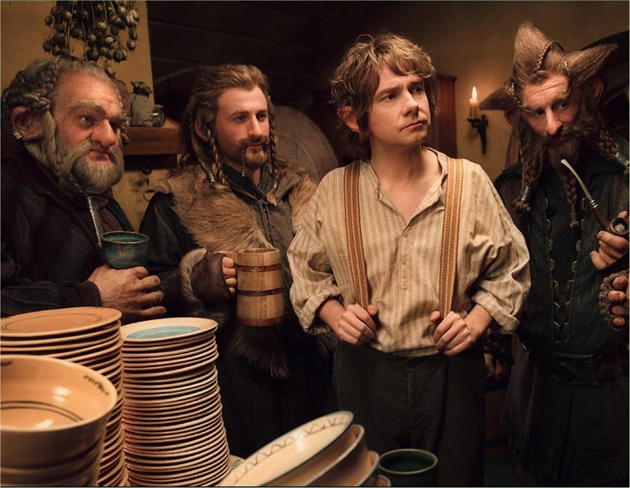
  • Image courtesy of Beau for County Now: http://beaufortcountynow.com/uploads/film_images/movie_stills/the_hobbit_2_630_pxlw.jpg
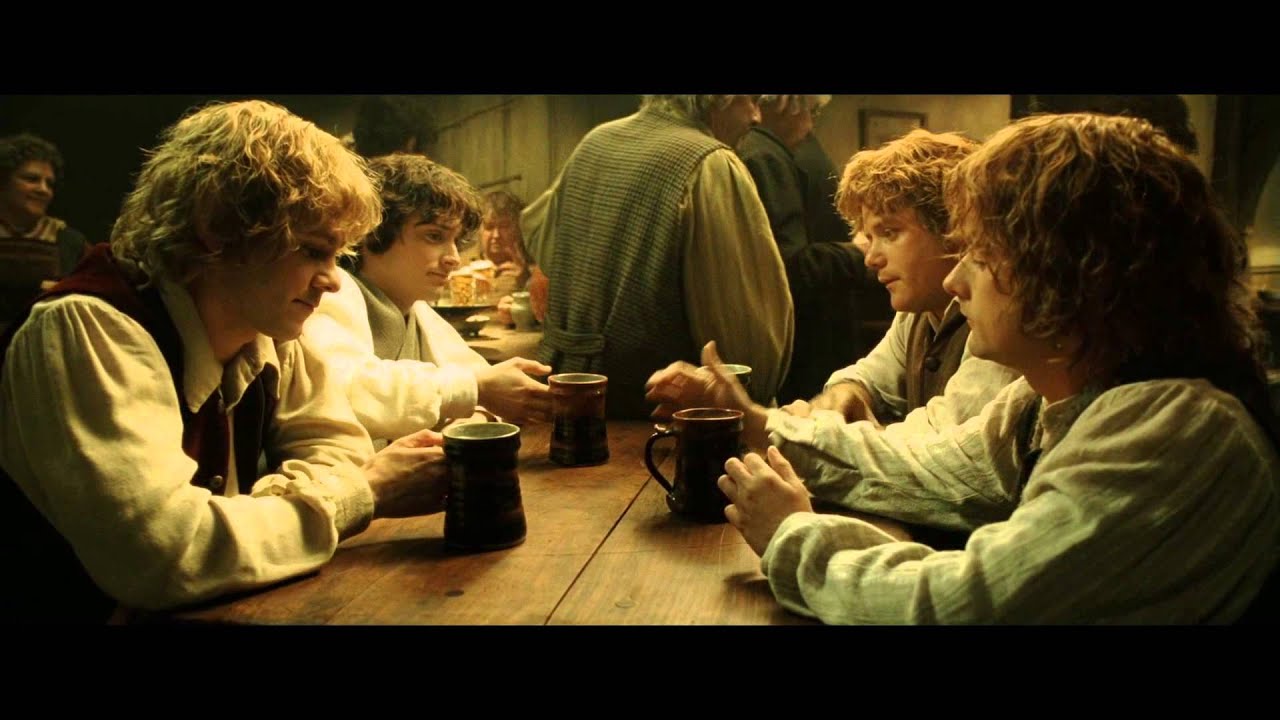
  • Image still from The Lord of the Rings: The Return of the King (2003) Dir. Peter Jackson.


Sunday, 16 March 2014

Elvish eats: Lembas bread!

Due to popular demand (having nerdy friends) today I present a discussion and recipe for Lembas!

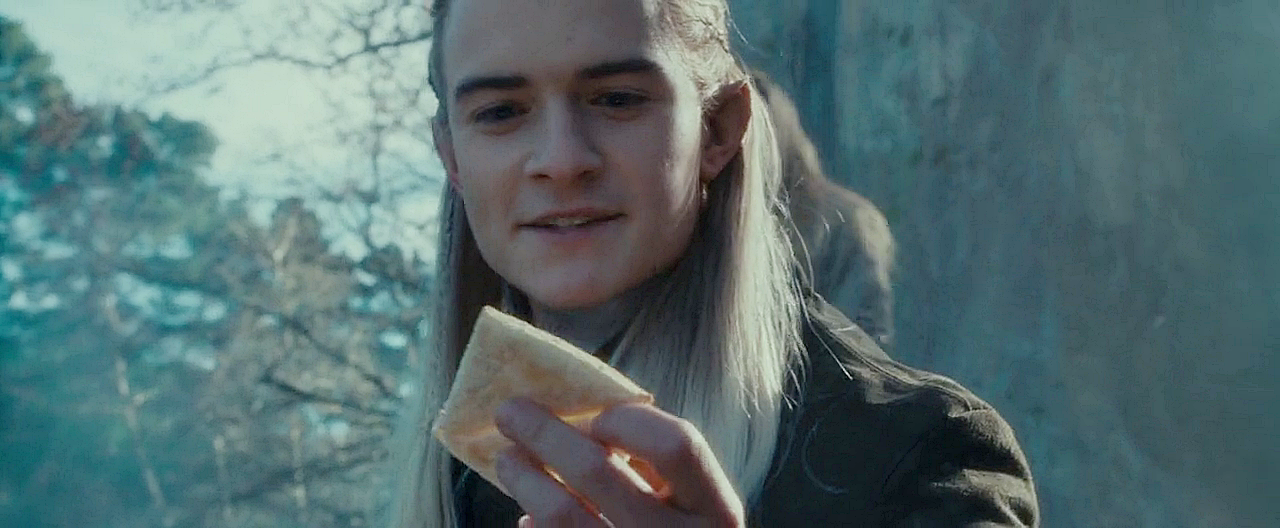
Lembas, also known as Waybread, is one of the few foodstuffs continually mentioned throughout The Hobbit and The Lord of the Rings Series, and several fans like myself take great joy in attempting to recreate it and bring a small part of Tolkien's magical world to life.


It is the ultimate travelling food - portable, lightweight, with a long shelf-life... It seems that Tolkien may have taken inspiration from military life. Lembas seem to be his fantasy interpretation of Sea Biscuits: "a type of unleavened bread which was baked, sliced and oven dried. [...] used for centuries as rations for sailors. In good conditions it would keep for a year or more in sealed barrels, but at sea it was often difficult to keep it dry, and it could become infested by weevils." (718) While it is documented by food historians that sea biscuits were one of the few long-life food products available during the time of use (16th - 19th centuries), it is also well-documented that they were bland and required softening prior to eating so as not to break one's teeth. The ingredients for Ship's Biscuits, taken from a  recipe provided by the Royal Naval Museum, are as follows:

  • Wholemeal flour
  • Salt
  • Water

While Tolkien's adventurers, not unlike the sailors of years gone by, are on a long and arduous quest, they inhabit a world of magic, and with magic come Elves. Though Peter Jackson's film adaptations refer to it as Lembas bread (which I found somewhat misleading while researching content for this post), Lembas is not far from the description of Ship's Biscuits above. The most notable exception to this of course, is that Lembas are delicious.

"The food was mostly in the form of very thin cakes, made of a meal that was baked a light brown on the outside, and inside was the colour of cream. Gimli took up one of the cakes and looked at with with a doubtful eye.
'Cram,' he said under his breath, as he broke off a crisp corner and nibbled at it, His expression quickly changed, and he ate all the rest of the cake with relish. 
[...]
'Eat a little at a time, and only at need. For these things are given to serve you when all else fails. The cakes will keep sweet for many, many days, if they are unbroken and left in their leaf-wrappings.'" (481-482)


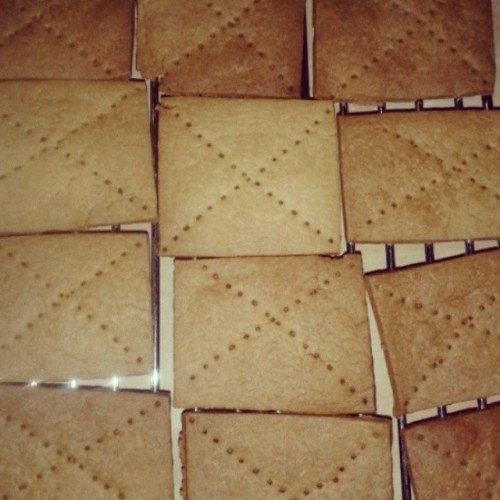
In short, Lembas are to be long lasting, filling, and sweet. This taken into account, Lembas are less like Ship's Biscuits and more like shortbread; with their high fat content, robust form and sweet flavour. The following recipe is my own.

Elvish Lembas

Ingredients:

  • 150g caster sugar
  • 300g cold salted butter*
  • 450g plain flour
  • 1tsp vanilla extract
Method:
  1. Preheat the oven to 180ºC
  2. Measure the sugar into a large mixing bowl. Chop the butter into small cubes and put in with the sugar. Cream together with a wooden spoon or electric mixer, until a pale and fluffy.
  3. Beat in the vanilla extract.
  4. Sift in 1/3 of the flour into the butter mixture and mix. When it is just combined, add the next 1/3 of flour. Repeat until all flour is added and you have a stiff dough.
  5. Shape into a ball and leave to rest in a fridge for 15 minutes.
  6. On a lightly floured surface, roll out the dough to 1cm thickness. With a knife, cut into even squares and place on a lined baking sheet. Score an 'X' across each square.
  7. Chill in the fridge for another 10 minutes.
  8. Bake for 15-20 minutes, or until a light golden brown.
Store in an airtight container (or leaf wrappings, if you have those to hand).
*If using unsalted butter, add a small pinch of salt in with the flour.


Bibliography:
  • (1999) 'Ship's Biscuit', The Oxford Companion to Food ed. Alan Davidson Oxford: Oxford University Press
  • Royal Naval Museum Library (2000) 'Ship's Biscuits: the Sailor's Diet', Research. Web: http://www.royalnavalmuseum.org/info_sheet_ship_biscuit.htm
  • J.R.R. Tolkien (1955) The Lord of the Rings: The Fellowship of the Ring. London: HarperCollins (2007)
  • Image courtesy of Lord of the Rings Wikia: http://img1.wikia.nocookie.net/__cb20121201075601/lotr/images/1/14/Lembas_bread.png

Thursday, 27 February 2014

Feasting and Fasting (part 2)

In my last post in this series, we examined the concept of feasts: a large and abundant meal shared by many individuals, usually to mark a celebration or significant occasion. In the case of Théoden's funeral, the food and wine at the feast not only helped to bring physical comfort and pleasure to the mourners, but brought them together in celebration of his life and of a positive future for Théoden's surviving children.

Théoden's funeral is the final feast mentioned in the Lord of the Rings series. Though it is made clear that all remaining members of the party led relatively peaceful, comfortable lives following their return to their respective homes; the extravagance of the event serves to close a large chapter of their lives. Their days of struggle and starvation on their quests are over, but so are their victories. Life is to continue as before they knew about the ring.


It is the struggle to safely take the ring to Mordor during which the brunt of the story takes place. Tolkien whisks his hobbits away from safety, from second breakfasts and suppers and large round bellies and throws them in the face of adversity and deprivation. They must learn from and rely on the endurance and wisdom of Aragorn, Gimli and Legolas to make do with what little they have in what is a state of war in Middle Earth.

"Down in the lowest and most sheltered corner of the dell they lit a fire and prepared a meal. The shades of evening began to fall, and it grew cold. they were suddenly aware of great hunger, for they had not eaten anything since breakfast; but they dared not make more than a frugal supper.

[...]

'I don't see how our food can be made to last,' said Frodo. 'We have been careful enough in the last few days, and this supper is no feast; but we have used more than we ought, if we have two weeks to go, and perhaps more.'"(248)


The above excerpt from Fellowship of the Ring is one of many similar examples: the fellowship must travel miles and miles on difficult terrain, from town to town, evading capture and injury as best they can. There is very much a sense of uncertainty throughout: 'perhaps more' is indicative of Frodo's pessimism about the future of the quest, and of their safety. It provides evidence that the hobbits, at the very least, do not see far ahead, and yet they must if they are to ration their food adequately. In contrast with the feast, company, and solid shelter at Théoden's funeral later in the series, there is no comfort to be found for the fellowship here. 'The lowest and most sheltered corner of the dell' is they closest they have: a corner of an open valley, exposed to the cold and the elements is not adequate, but it must do. Indeed, for the hobbits it is a far cry from the comforts of the shire.

The concept of safety is also disregarded completely; Frodo's speech repeatedly focuses on being frugal, careful, planning ahead, and depriving themselves of what is needed at the time with what they will need in the future. The idea that the travellers do not 'dare' prepare a more filling supper is interesting, that they cannot take risks in what is an already dangerous journey. Taking care and preserving their resources is absolutely paramount.

Tolkien's Middle Earth, during the Lord of the Rings series, is a world under threat from an evil, powerful and power-hungry ruler, with resources and armies seemingly unparalleled throughout the land. Tyranny forces the inhabitants - be them human, hobbit, dwarf, elf or otherwise - to be careful in everything they do. As we have seen, this extends to food. In discussing food of the wartime periods, Nicki Humble explains that, "where people's choice of food had previously involved issues of tradition and habit, social status and style, it was now hedged with questions of patriotism and morality..." (23). This applies both to the home front and the battlefield. One can see these same problems and questions posed to the inhabitants of Middle Earth, the most marked being the change the hobbits face from a relatively carefree life at the start of The Fellowship of the Ring to being forced to resist temptation and be self-sacrificing for the greater good of the quest. Furthermore, the wandering and hunger the fellowship feel is not unlike those narratives of frontline soldiers, both in reality and in fictitious works as Ian McEwan's Atonement (2003).

The theme of struggle and deprivation, such as that felt by the fellowship, is not uncommon for a children's novel. Indeed, Tolkien uses it as a tool for moral education. Through being careful with resources and grateful for whatever food they may be given, and through creativity, there is food for all and strength throughout the arduous journey. Furthermore, it gives them a greater sense of appreciation for feasts in the future. For those children born following the two World Wars, for whom The Lord of the Rings was a formative series, the hunger pangs felt by Frodo and co. give a taste of the experience of those first readers' parents and grandparents lives, and perhaps a greater appreciation for the relative feasts they then got to enjoy.


Bibliography:
  1. J.R.R. Tolkien (1955) The Lord of the Rings: The Fellowship of the Ring. London: HarperCollins (2007) pp. 248
  2. Nicola Humble (2006) 'Mock Duck and Making Do' Culinary Pleasures: Cookbooks and the Transformation of British Food London: Faber & Faber.
  3. Image courtesty of weheartit: http://weheartit.com/entry/46608611
  4. Image courtesy of payleyfilms.net: http://paleyfilms.net/wp-content/uploads/2010/11/fellowship-of-the-ring.jpg