Much like the tales of Bilbo, Frodo, Gandalf and co., all good things must end eventually. So does this blog.
Today I will discuss the purpose served by food writing in fantasy literature.
One of the most striking things about Middle Earth is the multiculturalism. In The Hobbit and LOTR different races are brought together, united in a common goal not for themselves; but for the good of Middle Earth overall. Hobbits, Dwarves, Elves, Men all have separate communities, each with its own rich history, crafts, dress, and cuisine. I have already outlined some differences, and it is clear from the recipes that food is not only defined by culture, but is a tangible representation of that culture. Unfortunately there is little description of the food cooked during the adventures, so we can assume that basic dishes are shared by all Middle-Earthians.
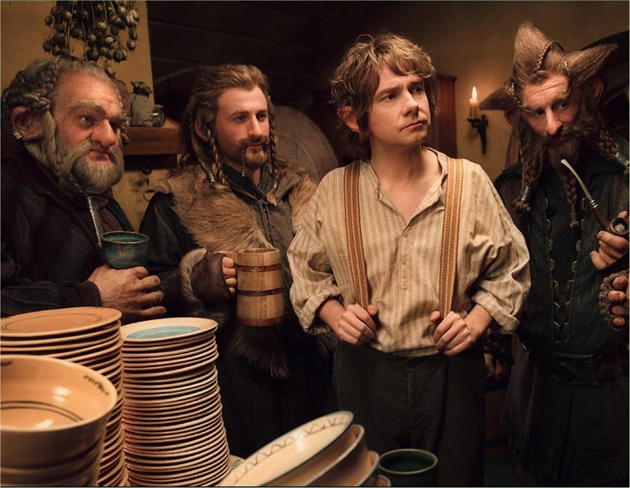 Likewise, in the feasts (and lack thereof) referenced throughout, Tolkien provides no description of the food. Readers can imagine for themselves what a Hobbit may find at an Elvish treetop, or what a Dwarf would make of a human's table spread. This absence indicates that it is about the feeling of eating or starving, rather than the taste. Feasts and famines are shared by the groups, and thus all beings are sharing in each other's joys and sorrows. These emotional bonds, sharing of cultures, and the feeling of hunger are not tangible, but are real and relatable aspects of the texts. By evoking these emotions, Tolkien anchors a world of magic and mythology to a baseline of reality. This provides a form of moral socialisation for child readers, teaching empathy and compassion.
I have yet been unable to discuss themes of evil and consumption in the novels. While I have explored the risk of being eaten, I have been unable to examine this in relation to power, which I shall now do briefly through the example of Gollum. Formerly Smeagol, Gollum from first contact was overwhelmed by the ring. Mightily powerful, forged in flame, the ring is not living, yet has control over others. In years spent with his precious, Gollum becomes consumed by the ring. His civilised hobbit ways are overruled in favour of animalistic hunting and raw eating of fish - comparatively powerless creatures. It is not insignificant then, that at Mount Doom, Gollum literally consumes the ring, biting Frodo's finger off before falling to his death.
Greed exhibited by desiring the ring's power is markedly different to the desire for food. Even for hobbits, with their rotund bellies and second breakfasts, food is a marker of comfort. To desire food is to desire contentment. To desire power is to desire corruption. Ironically, to desire the power of the ring is to become powerless oneself.
Consumption and food are distinct in the purposes served. Overconsumption, be it of powerless creatures, of power, is greed. Greed has unpalatable consequences. Consumption is a food chain of power, examples of which are warnings. Conversely, food serves to unify: be it cultures, be it in grief or celebration, be it fantasy characters and real world readers.
Bibliography:
Today I will discuss the purpose served by food writing in fantasy literature.
One of the most striking things about Middle Earth is the multiculturalism. In The Hobbit and LOTR different races are brought together, united in a common goal not for themselves; but for the good of Middle Earth overall. Hobbits, Dwarves, Elves, Men all have separate communities, each with its own rich history, crafts, dress, and cuisine. I have already outlined some differences, and it is clear from the recipes that food is not only defined by culture, but is a tangible representation of that culture. Unfortunately there is little description of the food cooked during the adventures, so we can assume that basic dishes are shared by all Middle-Earthians.
I have yet been unable to discuss themes of evil and consumption in the novels. While I have explored the risk of being eaten, I have been unable to examine this in relation to power, which I shall now do briefly through the example of Gollum. Formerly Smeagol, Gollum from first contact was overwhelmed by the ring. Mightily powerful, forged in flame, the ring is not living, yet has control over others. In years spent with his precious, Gollum becomes consumed by the ring. His civilised hobbit ways are overruled in favour of animalistic hunting and raw eating of fish - comparatively powerless creatures. It is not insignificant then, that at Mount Doom, Gollum literally consumes the ring, biting Frodo's finger off before falling to his death.
Greed exhibited by desiring the ring's power is markedly different to the desire for food. Even for hobbits, with their rotund bellies and second breakfasts, food is a marker of comfort. To desire food is to desire contentment. To desire power is to desire corruption. Ironically, to desire the power of the ring is to become powerless oneself.
Consumption and food are distinct in the purposes served. Overconsumption, be it of powerless creatures, of power, is greed. Greed has unpalatable consequences. Consumption is a food chain of power, examples of which are warnings. Conversely, food serves to unify: be it cultures, be it in grief or celebration, be it fantasy characters and real world readers.
Bibliography:
- Image courtesy of Beau for County Now: http://beaufortcountynow.com/uploads/film_images/movie_stills/the_hobbit_2_630_pxlw.jpg
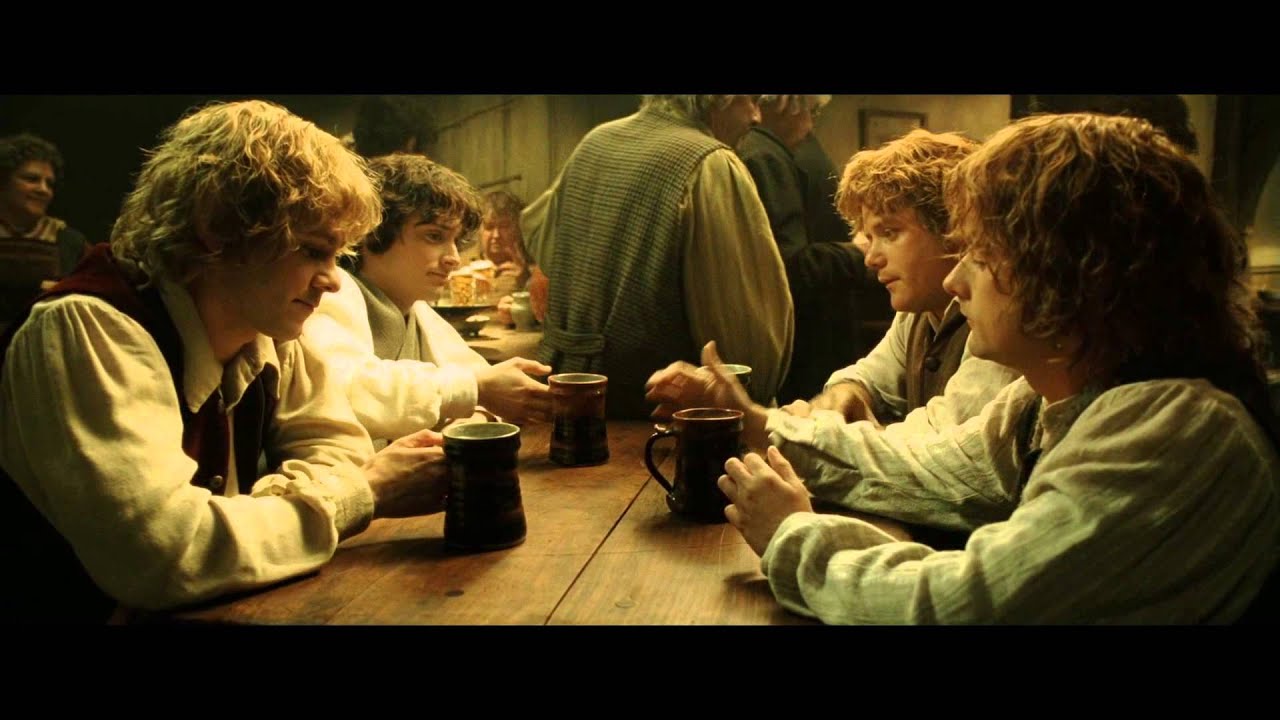
- Image still from The Lord of the Rings: The Return of the King (2003) Dir. Peter Jackson.


